Q: What is screen printing?
Screen printing is a traditional printing technique where ink is pushed through a stenciled mesh screen onto a material to create bold, vibrant, and durable designs.
Professional Branding Solutions for Apparel, Bags & Textile Merchandise
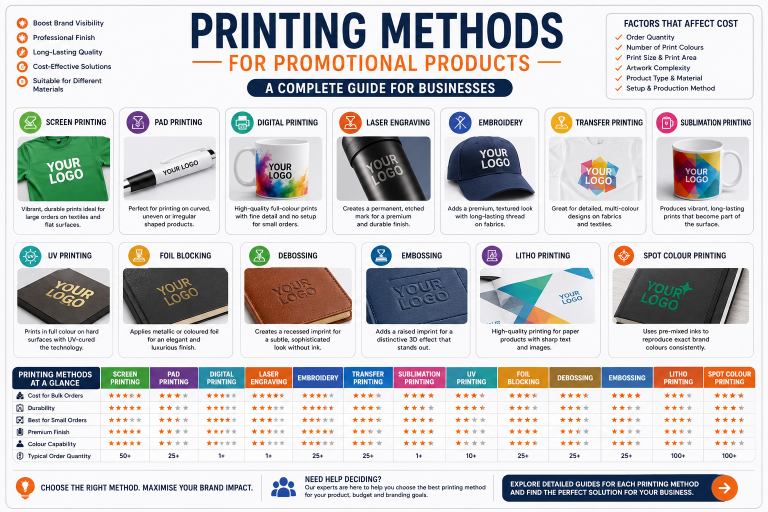
| Best For | Promotional Clothing, Tote Bags & Textile Products |
| Ideal Order Quantity | 50+ Units |
| Cost Efficiency | Excellent for Medium & Large Orders |
| Durability | ⭐⭐⭐⭐⭐ Excellent (Long-lasting & wash-fast) |
| Colour Quality | ⭐⭐⭐⭐⭐ Vibrant, Highly Opaque Ink Coverage |
| Pantone Matching | ✔ Yes (Exact brand color matching) |
| Suitable Materials | Cotton, Organic Cotton, Canvas, Polyester, Blends |
| Typical Business Uses | Uniforms, Events, Trade Shows, Corporate Giveaways |
Screen printing remains one of the most popular branding methods for promotional products because it offers an exceptional balance of premium quality, durability, and cost-effectiveness.
Businesses choose screen printing for medium-to-large production runs where consistent branding, vibrant colours, and long-lasting print quality are essential. Whether used for staff uniforms, promotional giveaways, trade exhibitions, or marketing campaigns, screen printing delivers reliable results that help businesses maximize their brand visibility.
Screen printing works best on flat or slightly curved surfaces, particularly textiles and fabric-based promotional merchandise. Here is a breakdown of the top categories where screen printing is used most effectively:
Apparel makes up the largest share of screen-printed promotional merchandise. Because fabric surfaces absorb ink so well, screen printing produces rich, long-lasting prints that endure frequent wear and washing.
Promotional T-Shirts: The single most common product for screen printing, widely used for event giveaways, campaigns, and team uniforms.
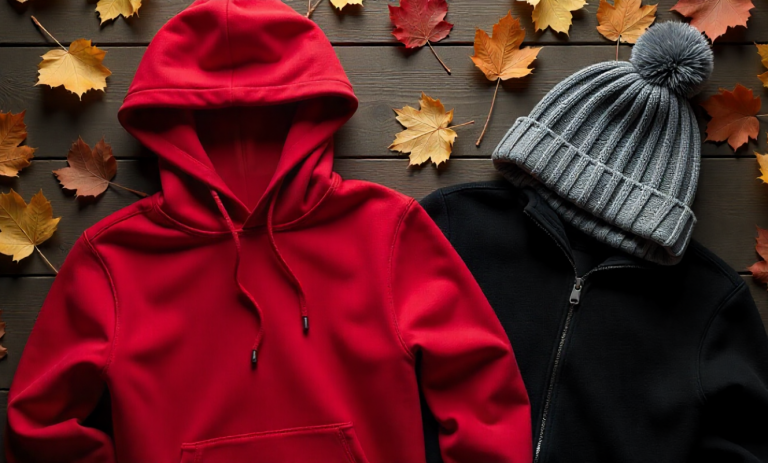
Hoodies & Sweatshirts: Popular for school/university merch, corporate winter wear, and retail brand apparel.
Polo TShirts & Workwear: Used for employee uniforms where durable branding is required.
Hi-Vis & Safety Wear: High-contrast screen inks ensure visibility and compliance on construction or site uniforms.
Flat fabric surfaces make bags exceptionally well-suited for screen printing, allowing for large, bold brand logos at a relatively low unit cost.
Cotton Shopper Tote Bags: Extremely popular for trade shows, retail packaging, and eco-friendly giveaway campaigns.
Canvas Bags: Heavyweight fabric that takes screen printing ink well for a premium feel.
Drawstring Backpacks: Commonly printed in large quantities for sports events, marathons, and youth campaigns.
Flat woven items used in commercial or promotional settings are often screen printed for high durability against stains and washing.
Aprons: Used heavily in hospitality (restaurants, cafés, bars) and retail promotions.
Tea Towels & Oven Mitts: Popular as home-goods promotional items and gift sets.
Sports Kits & Jerseys: Used for local sports clubs, marathons, and fitness centers because screen printing offers high-contrast, durable numbers and logos.
Flat Surfaces: Textiles lay flat during the printing process, allowing screens to apply ink quickly and consistently.
High Ink Absorption: Fabric fibers absorb screen printing inks deeply, resulting in vibrant, long-lasting colors that don’t easily peel or fade.
Cost Efficiency at Scale: Products like T-shirts and tote bags are typically ordered in bulk (100+ units), which makes screen printing the most economical choice.
Screen printing achieves excellent adhesion and color output on a wide variety of natural and synthetic materials, including:
Several key factors determine the final price of a screen-printed order:
| Business Requirement | Recommended? | Recommendation Summary |
|---|---|---|
| 10 promotional T-shirts | ❌ No | Consider Digital Printing (DTG) to avoid fixed setup fees. |
| 50 branded tote bags | ✅ Yes | Great choice with balanced setup costs. |
| 250 staff uniforms | ⭐ High | Excellent value with durable, highly consistent branding. |
| 1,000 event T-shirts | ⭐⭐⭐ Best | Highly recommended for the lowest possible cost-per-unit. |
| Full-colour photographic design | ❌ No | Digital Printing is much more suitable for fine details. |
| 1-to-3 colour corporate logo | ⭐ Ideal | Ideal for vibrant, exact-match Pantone colour results. |
Screen printing is a traditional printing technique where ink is pushed through a stenciled mesh screen onto a material to create bold, vibrant, and durable designs.
Yes. Screen-printed designs sink deep into garment fibers or adhere firmly to surfaces, enabling them to withstand repeated washings without cracking or fading.
Screen printing inks used on garments are wash-fast, and specialized solvent or UV inks can be applied to non-textile items for waterproof, outdoor performance.
Yes, screen printing allows for precise ink mixing to match exact Pantone (PMS) brand colours.
High-resolution vector files—such as .AI, .EPS, or vector .PDF—are required to create the film positives used for screen preparation.
Modern screen printing utilizes eco-friendly, water-based, and phthalate-free inks alongside efficient water recycling systems during the screen reclamation process.
31st March 2023

1st June 2023
1st May 2026
8th July 2023
23rd September 2025

31st March 2023
31st March 2023
30th July 2026

11th October 2023

7th July 2023